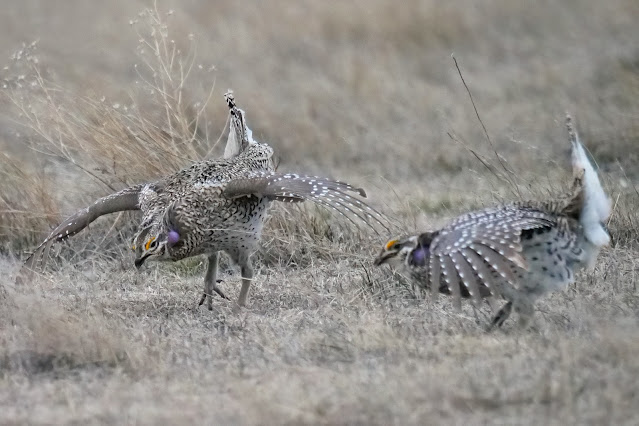
The South Dakota prairie continues to be cold and windy. That did not seem to be a concern for the Sharp-tailed Grouse this morning. We headed out to the lek at 5 am today bundled up again in all we owned since it was 22F with just a slight 11 mph wind gently bending the grasses. By 5:45 am, the birds were dancing all over the lek as the sky lightened slowly before 6:06 am sunrise. We never got the yellow sunlight. Snow was predicted so the sky was low and grey...tough conditions for photographing. In the first image above, the typical hovering aircraft position is one of several behaviors of this grouse species. The males hop a little, strut around in this fighter jet position with very quick short running steps, and then confront another male to begin the dance again. We saw more than 30 birds this morning. It is always hard to count and photograph and keep the trigger finger warm. We were positioned well today with many observation choices.
Our newest article! It's Christine and Sandy here inviting you to read our latest publication in the 2025 North American Grouse Partnership Annual Magazine. This year we write about the greater prairie chicken in Yuma County, Colorado and how populations are doing today. Included are factors that limit growth and ranchers who are conservation heroes for the birds, prairies and other wildlife that depend on grasslands to exist. Read the article by clicking on the image above. If this is the first time reading our blog, welcome! We are losing two million acres of prairies each year to a number of factors. If we don't protect them now it will be too late. Learn more about the work attributed to the North American Grouse Partnership group and their partners HERE . If you love prairies, specifically the wildlife who call prairies home, consider becoming a member or making a donation. Christine and I are heading out to study Bi-State grouse along th...
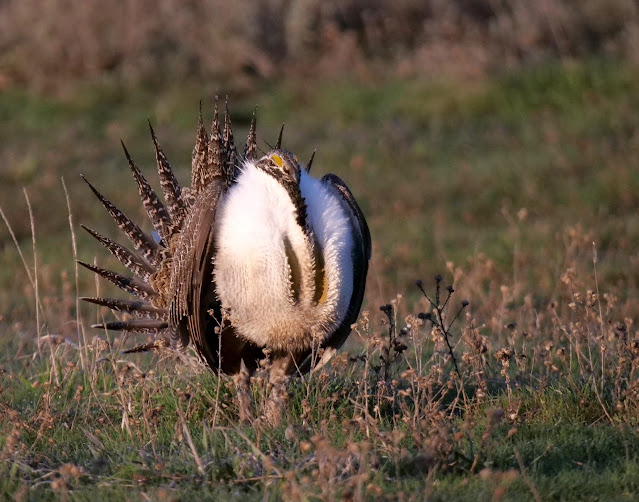
We spent the early morning hours on the sage grouse lek where our journey began one year ago on April 1, 2021. The sage grouse were barely visible in the Waning Gibbous moonlight, but the booming could be heard clearly. The above booming sequence gives you a little idea of the physical changes in the sage grouse as it lifts and fans its tail feathers, fills its yellow sacs with air, stretches up tall, drops its chest while deflating the sacs, and finally returns to its resting state. The booms sound a bit like popping water balloons and gurgles. As the morning light rises on the lek, the tail feather shadows draw across the back of the male creating interesting patterns, and then the grouse and sun move. This year we were on the lek site toward the end of April which meant the birds stayed around a little longer in better light for photography and it was warmer at 46F. Finally, the magic moment came, seemingly at the same time as the arrival of ...



Comments
Post a Comment